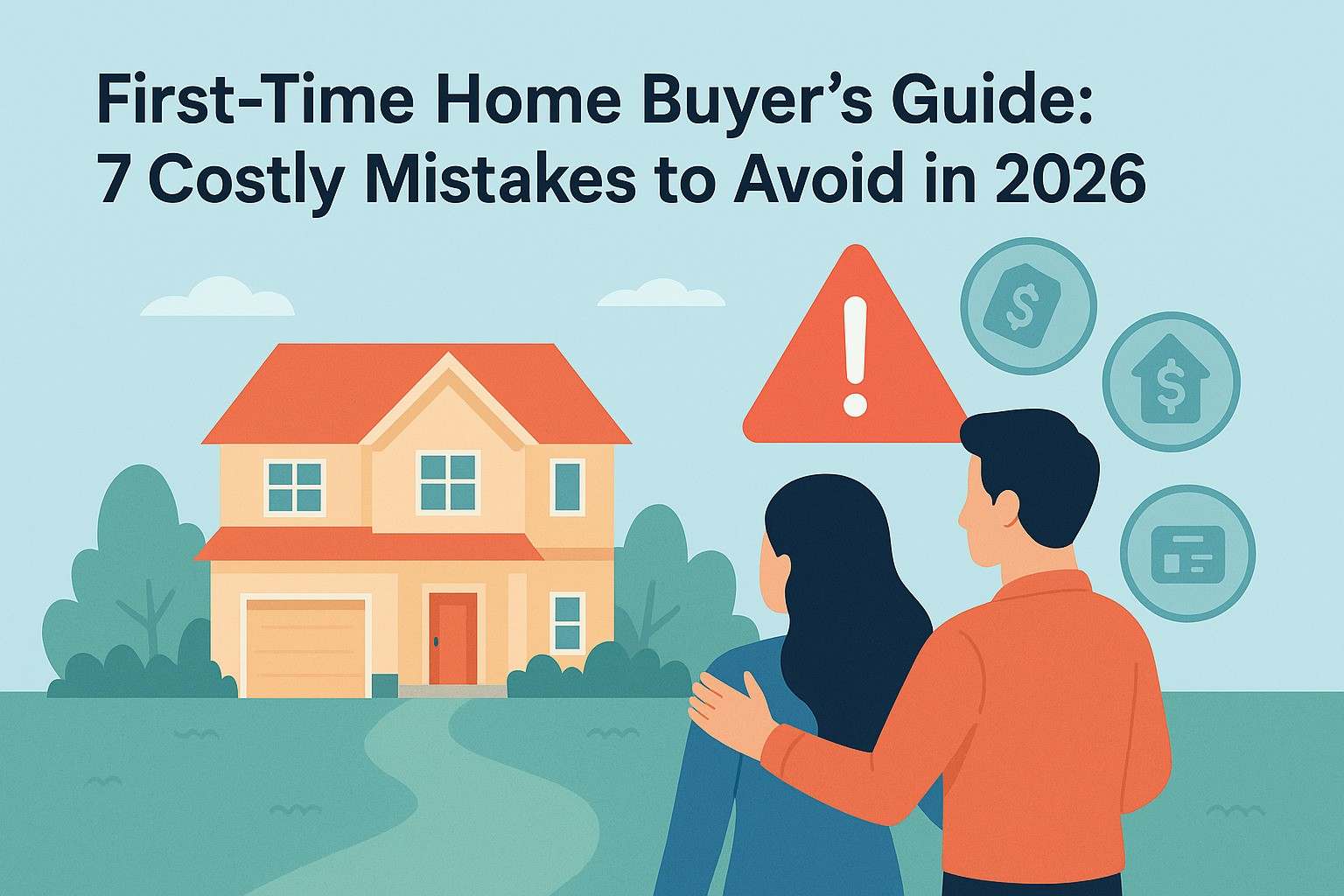
Buying your first home is a whirlwind of emotions. It’s exciting, terrifying, and deeply personal all at once. It’s easy to get swept up in the dream of paint colors and backyard barbecues. But getting lost in the dream without a firm grip on reality can lead to some massive, costly mistakes.
This isn’t about scaring you. It’s about preparing you.
Think of this guide as a conversation with a friend who has been there before. We’re going to walk through the seven most common (and most expensive) traps that first-time buyers fall into. Avoiding them will save you not just thousands of dollars, but also a world of stress.
Mistake #1: House Hunting Without a Real Pre-Approval
This is the big one. Many buyers get a quick “pre-qualification” online and think they’re ready to go. They’re not. A pre-qualification is just a rough estimate based on the numbers you provide.
A pre-approval is the real deal. This is where a lender actually digs into your financials—your pay stubs, your tax returns, your debt—and gives you a firm, written commitment for a specific loan amount.
Why is this so critical? Two reasons. First, it tells you what your actual budget is, so you’re not wasting time looking at houses you can’t afford. Second, in a competitive market, an offer from a buyer with a pre-approval letter is taken far more seriously than one without. It shows the seller you’re a serious, qualified buyer.
Mistake #2: Emptying Your Savings for the Down Payment
It’s tempting. You want to put down as much as possible to lower your monthly payment. But draining your bank account to zero to buy a house is one of the most dangerous things you can do.
You’re forgetting about the hidden costs:
- Closing Costs: These can be 2-5% of the home’s purchase price. That’s a huge chunk of cash.
- Moving Expenses: Movers, trucks, boxes… it all adds up.
- Immediate Needs: The moment you move in, you’ll realize you need a lawnmower, new curtains, or a minor repair.
Most importantly, you need a healthy emergency fund after you get the keys. What if the water heater breaks a month after you move in? Without a cash cushion, you’ll be forced to go into debt immediately.
Mistake #3: Falling in Love With the House, Not the Location
You can change the kitchen cabinets, the paint color, and the flooring. You cannot change your terrible commute, the noisy neighbors, or the fact that the nearest grocery store is 30 minutes away.
You are not just buying a house; you are buying a location and a lifestyle.
Before you make an offer, do your homework. Drive the commute during rush hour. Visit the neighborhood on a weeknight and a weekend. Look up school ratings and crime statistics. A perfect house in the wrong location is a recipe for regret.
Mistake #4: Waiving the Home Inspection
In a hot market, some buyers might be tempted to waive the inspection to make their offer more attractive.
Don’t. Ever. Do. This.
A home inspection is your single best protection against buying a money pit. For a few hundred dollars, a professional inspector will give you a detailed report on the health of the home’s most critical systems: the roof, foundation, plumbing, and electrical.
An inspection doesn’t just give you an “out” if there are major problems; it gives you negotiating power. If the inspector finds the furnace is on its last legs, you can ask the seller to replace it or give you a credit to cover the cost. Waiving the inspection is a blindfolded gamble that you can’t afford to lose.
Mistake #5: Only Budgeting for the Mortgage Payment
Your mortgage is only one piece of your monthly housing cost. The real cost of owning a home is much bigger. The acronym to remember is PITI.
- Principal: The part of your payment that pays down your loan balance.
- Interest: The cost of borrowing the money.
- Taxes: Property taxes, which are often rolled into your monthly payment.
- Insurance: Homeowners insurance is mandatory.
And it doesn’t stop there. You also need to budget for HOA fees (if applicable), utilities (which will likely be higher than when you were renting), and ongoing maintenance. A good rule of thumb is to budget at least 1% of your home’s value for maintenance and repairs every year.
Mistake #6: Assuming the First Lender is the Best Lender
You’re not obligated to get your mortgage from the bank where you have your checking account or the first lender that pre-approves you.
Shop around for your mortgage just like you would for a car. Compare interest rates, fees, and loan terms from at least three different lenders, including local credit unions, big banks, and online mortgage brokers. A tiny difference in the interest rate can save you tens of thousands of dollars over the life of the loan.
Mistake #7: Letting Emotions Hijack the Deal
This is the hardest one to follow. It’s easy to get emotionally attached to a house. You start picturing where your Christmas tree will go and what the kids’ rooms will look like.
But you have to remember: this is a business transaction.
Letting your emotions take over can cause you to overpay in a bidding war, ignore major red flags from the inspection, or make concessions you’ll regret later. Stay objective. Be willing to walk away. There will always be another house.
Conclusion: Buy Smart, Not Fast
Buying your first home is a huge achievement. By avoiding these common mistakes, you can ensure it’s a wise investment, not a source of financial strain. Take your time, do your homework, and trust your head, not just your heart. A smart, patient home buyer is always a successful one.